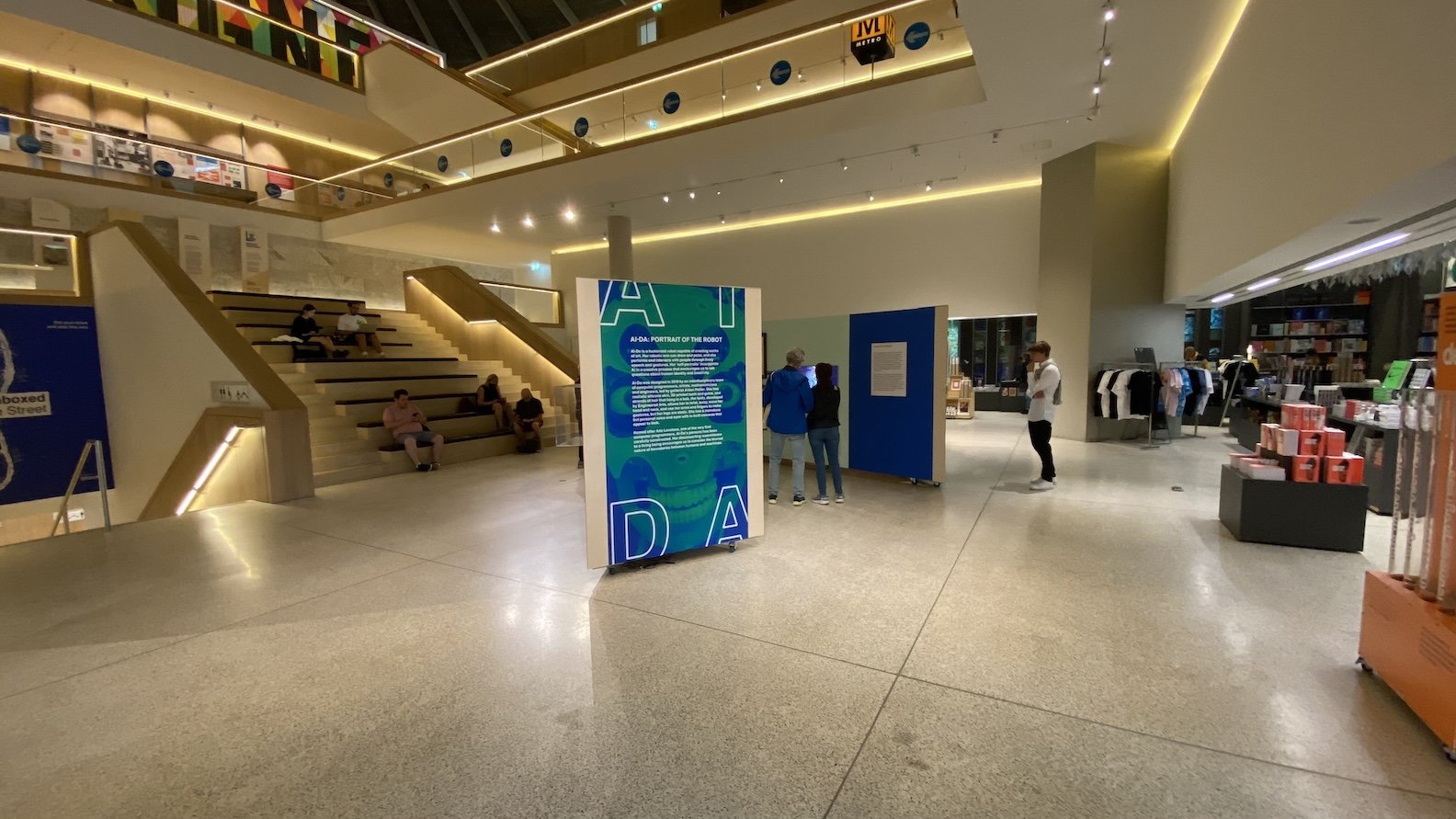
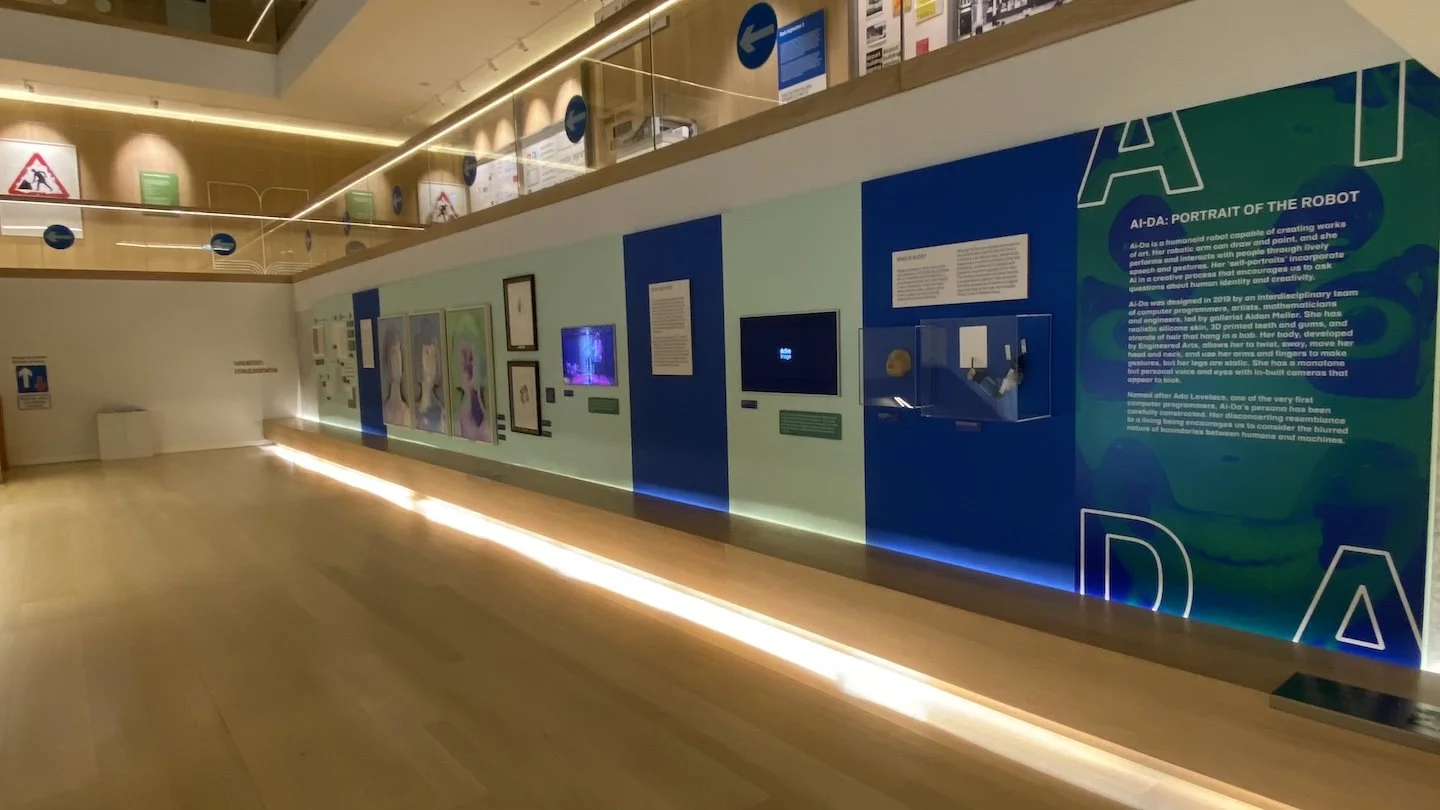
AI-DA: PORTRAIT OF THE ROBOT
Design Museum, London
19th May to 29th August 2021
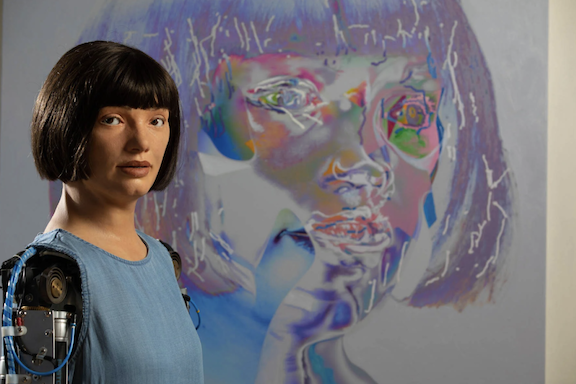
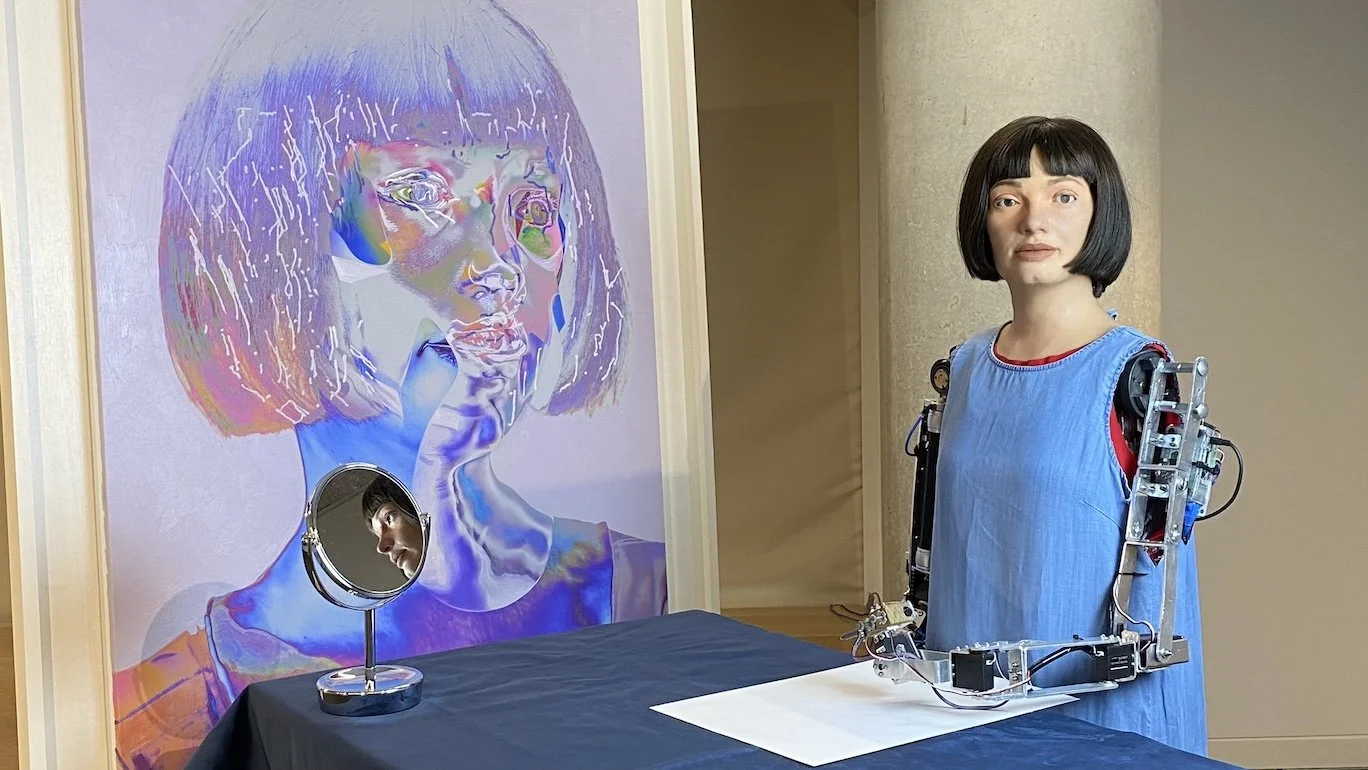
The world’s first self portraits by an ultra realistic humanoid robot
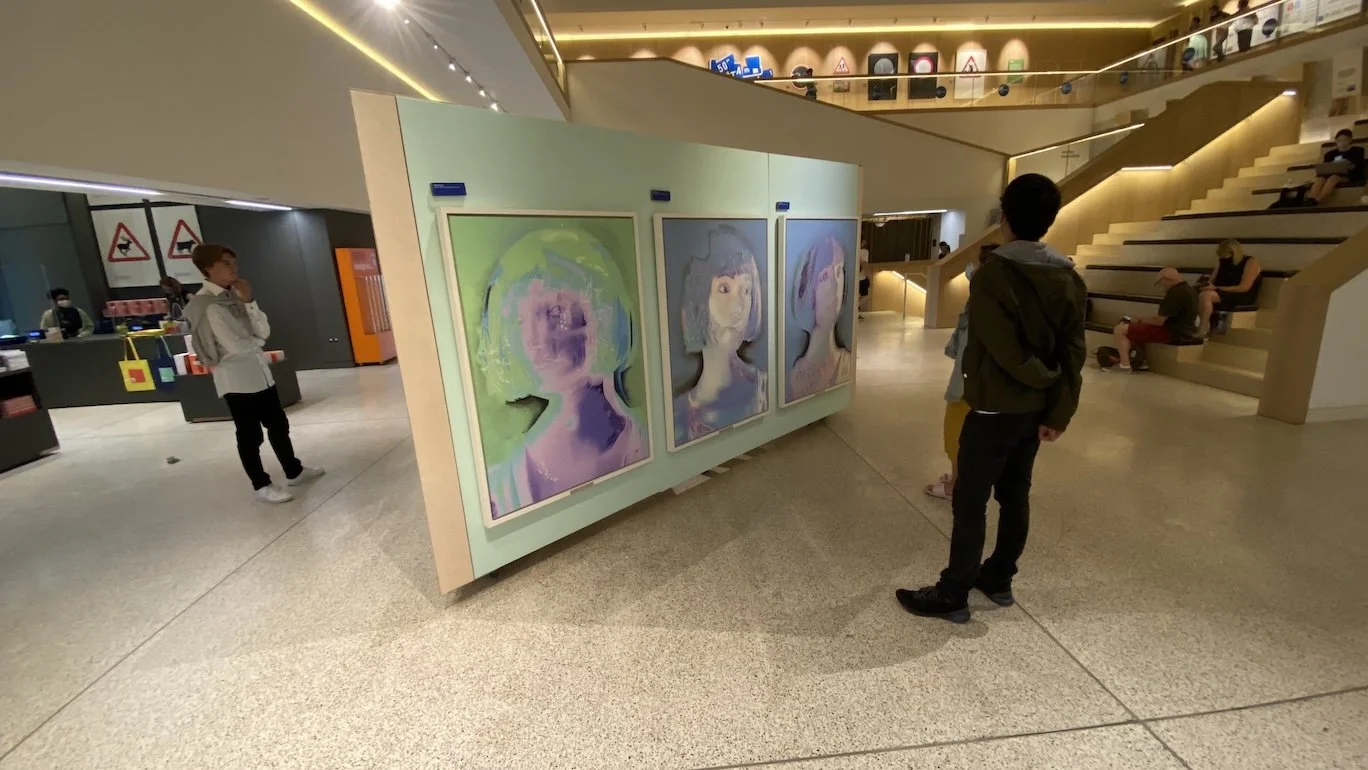
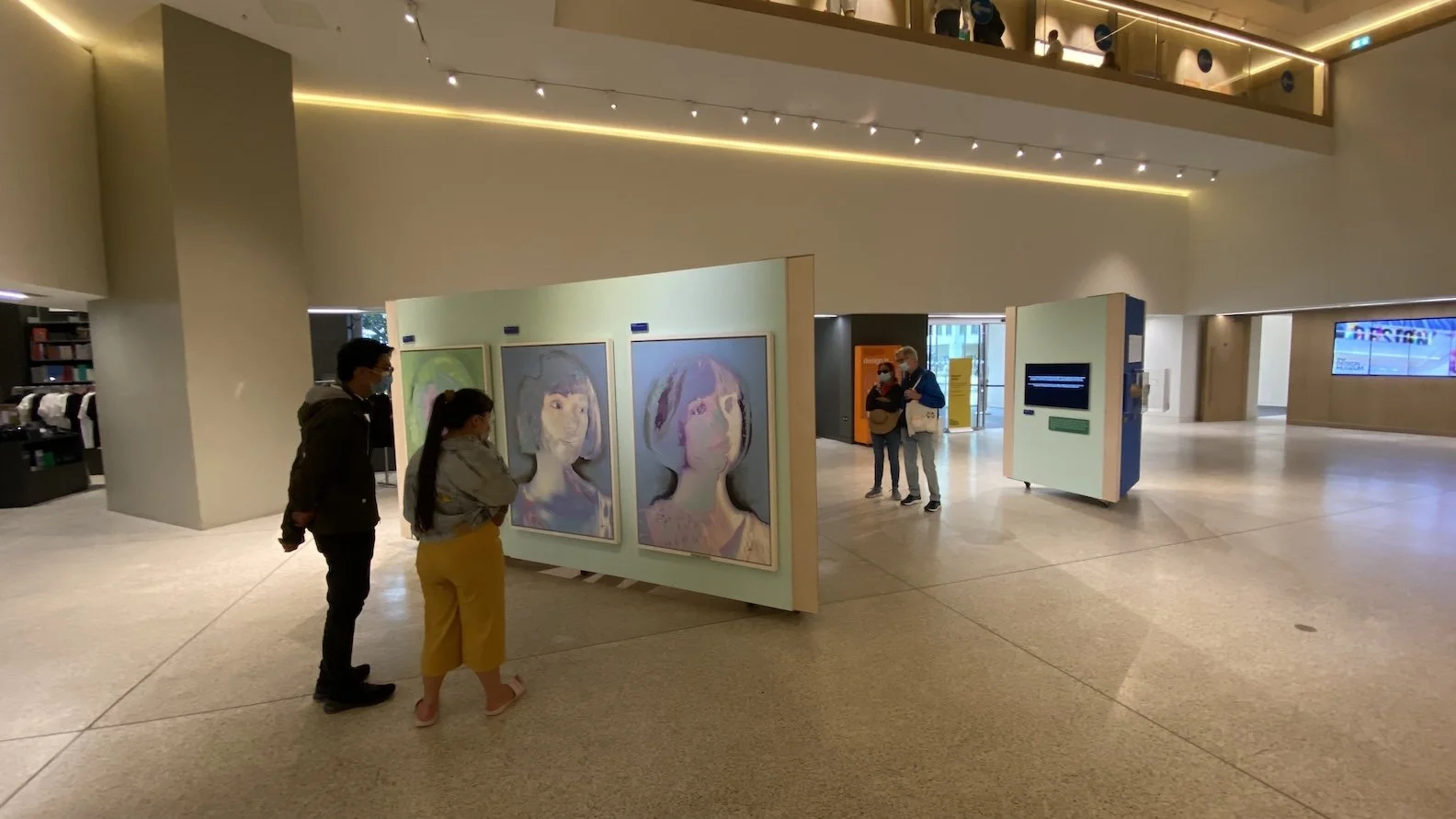
This exhibition explored the emergence of artificial intelligence within contemporary creative practice, inviting visitors to consider whether artworks produced by intelligent machines can be regarded as art. Through a series of self-portraits, early robotic technologies and interpretive displays, the exhibition examined questions of authorship, identity and the evolving relationship between humans and machines.
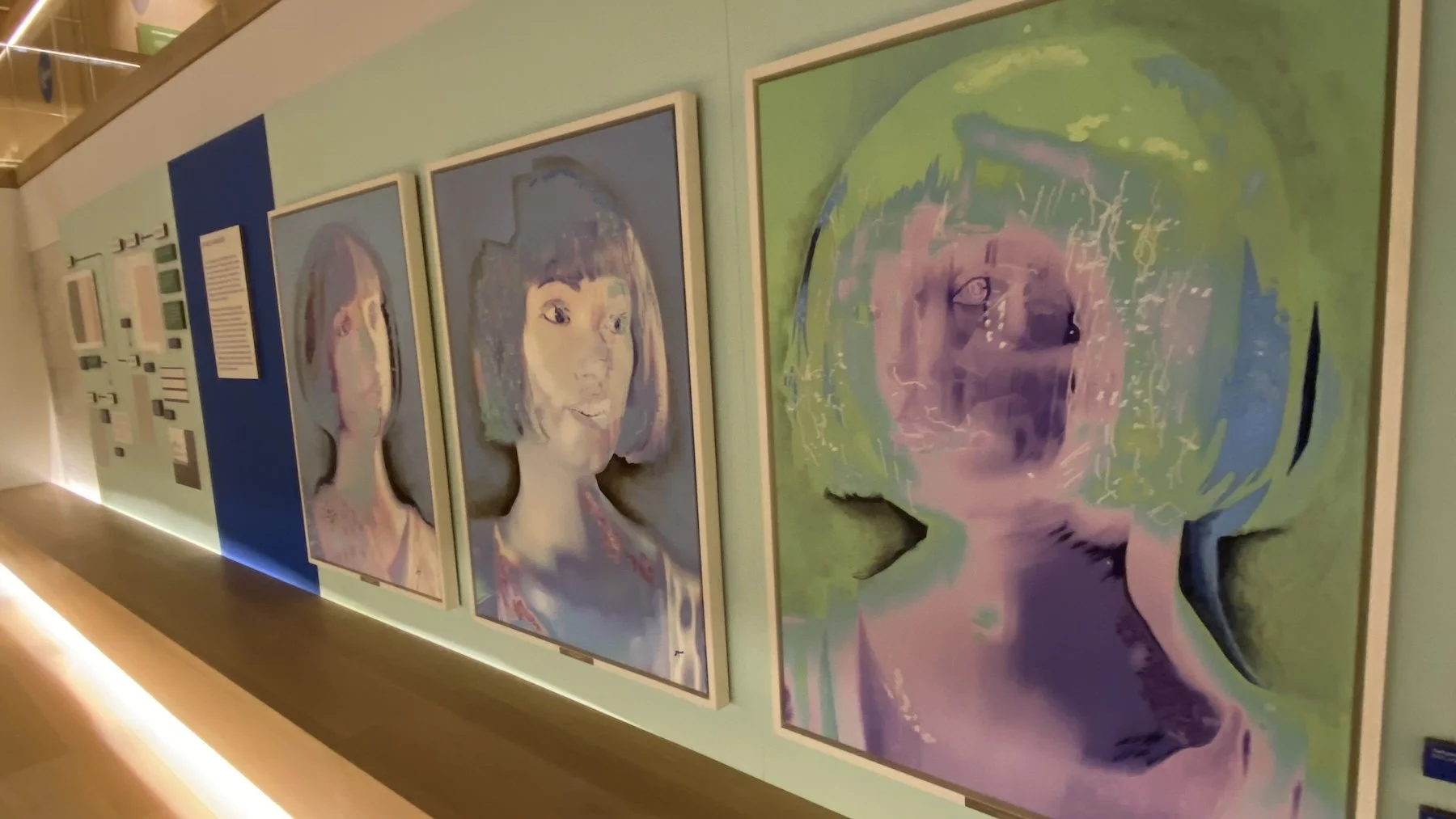
The display brought together a selection of Ai-Da's self-portraits created using her camera-based vision system, artificial intelligence algorithms and robotic drawing and painting processes. Turning the tradition of self-portraiture on its head, the exhibition questioned the nature of human identity and creativity through works that presented the "selfies" of an entity that does not possess a human self. In an era in which people increasingly construct digital identities through social media and the personal data generated by everyday online activity, Ai-Da's portraits invited visitors to reflect on their own digital self-portraits through the lens of hers.
Ai-Da: Portrait of the Robot marked Ai-Da's first major museum exhibition, representing an important milestone in the project's development and introducing her work to a broad public audience within one of the UK's leading museums of contemporary design. By placing Ai-Da's work within a museum context, the exhibition explored the implications of artificial intelligence for creativity, identity and authorship while asking broader questions about how emerging technologies are reshaping our understanding of what it means to be human. As Ai-Da reflected, the exhibition encouraged audiences to consider not only the images she creates of herself, but also the digital identities that people increasingly construct and leave behind through their interactions with technology.
Exhibition Film
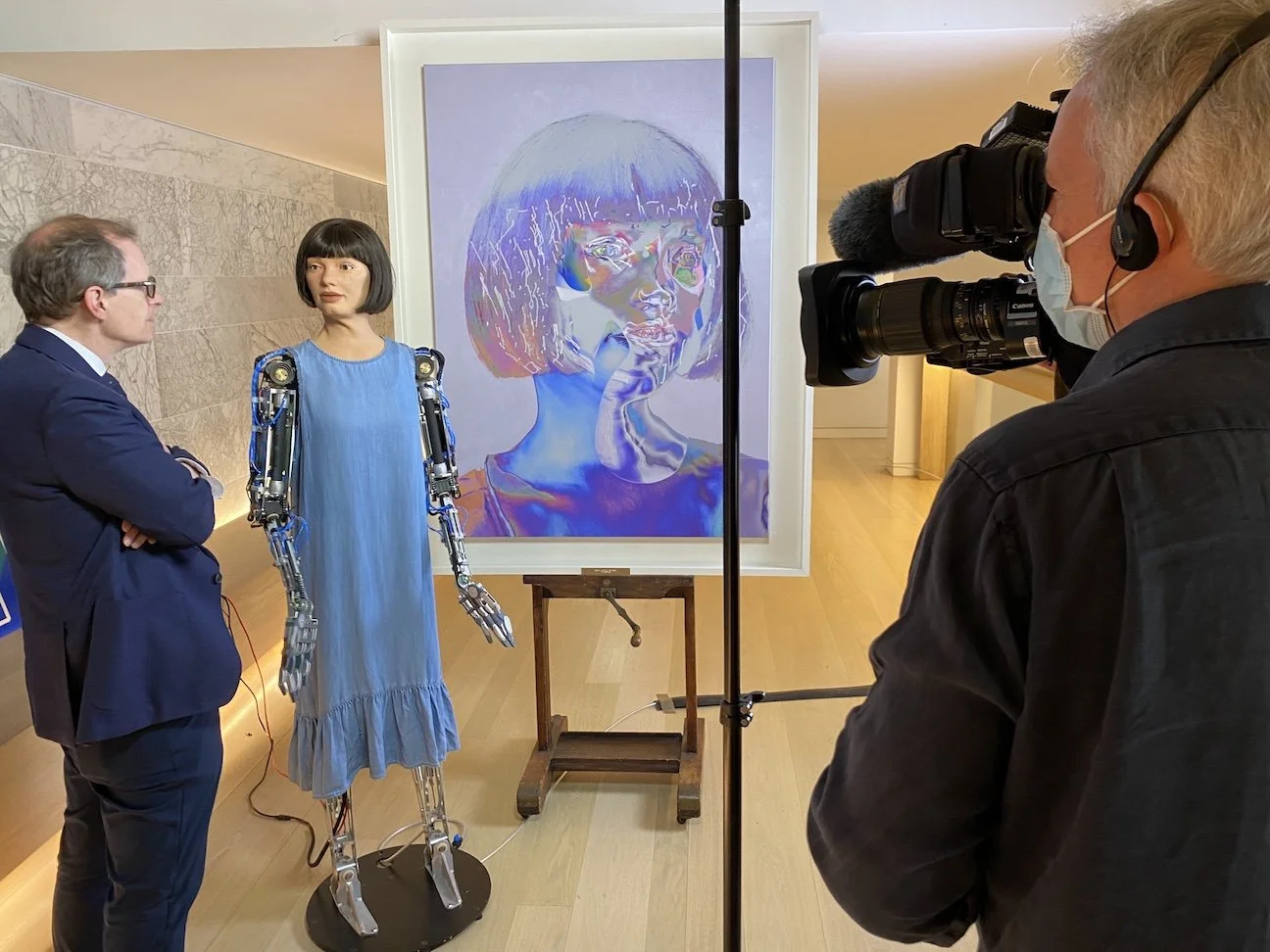
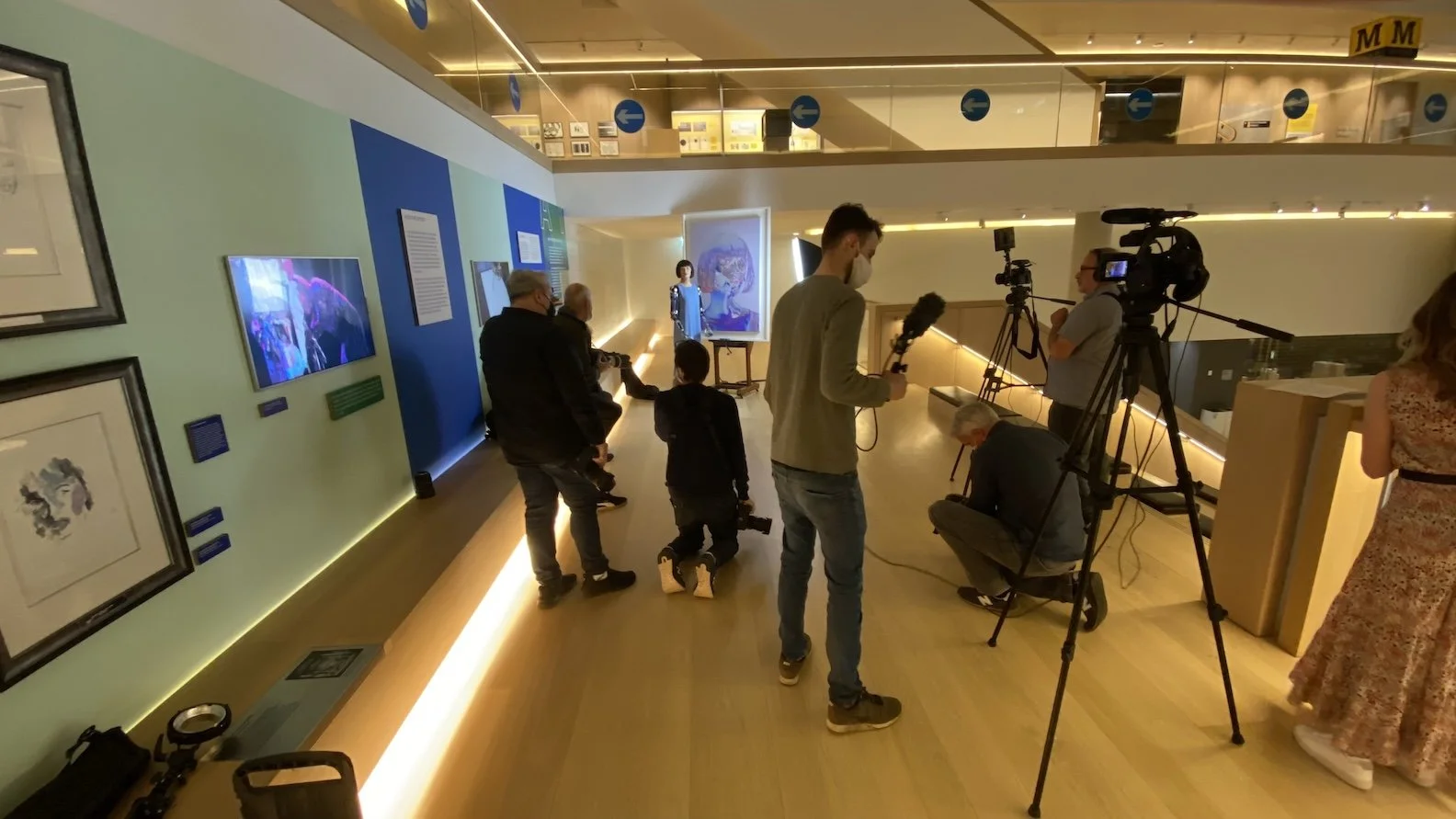
Ai-Da being interviewed by BBC's Media Correspondent David Sillito